Solid-State Batteries Pass an Extreme Test: What It Really Means for Used EV Prices
A solid-state system just survived a year underground in Beijing at 85C and 95% humidity. Here is why the news doesn't make your used EV obsolete, and what actually matters before you buy one.
A Chinese test shakes the battery narrative, but the calendar doesn't move
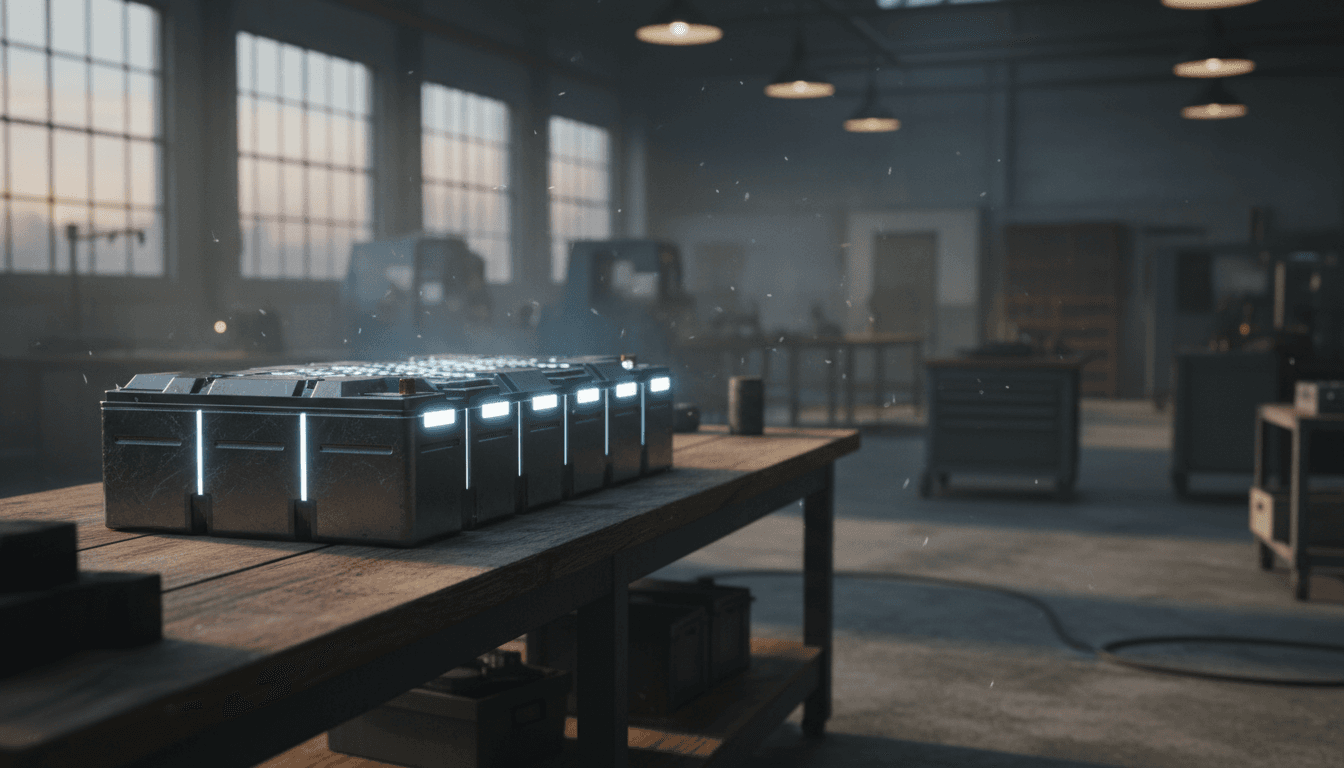
In the past few days a story has circulated across the trade press: a solid-state energy storage system completed twelve months of continuous operation underground in Beijing, withstanding temperatures between 40 and 85 degrees Celsius and humidity levels up to 95 percent, installed along a stretch of the district heating network in the Shijingshan district. On 15 July 2026, Beijing's Municipal Science and Technology Commission certified that the system had passed its full performance evaluation, a result the project's backer, Beijing Energy Group, is presenting as proof of industrial maturity for the technology. In parallel, another solid-state contender, Donut Lab, had an independent test verify a cell delivering 110 percent of rated capacity at 80 degrees and surviving a 100-degree discharge without measurable performance loss, fitted to the Verge TS Pro electric motorcycle.
These are real, verified developments, and for the first time they describe conditions close to industrial deployment rather than a lab bench. But for anyone looking at a used electric car listing today, the practical question is simple: do these breakthroughs suddenly make the lithium-ion battery in that listing old news? Based on the data, the answer is no, not yet, and not on the timeline the news cycle implies.
Why solid-state still isn't arriving at dealerships
The manufacturers that have committed to concrete timelines for cars, not motorcycles or stationary storage, still point to 2027-2028 for commercial launch: Toyota, Nissan and SAIC remain on that horizon, and in an industry known for slipping schedules that should be read as a floor, not a ceiling. The gap between a resilience test, however impressive, and an automotive production line at costs comparable to today's lithium-ion is enormous: it means moving from a demonstration plant or a low-volume motorcycle to millions of battery packs that must guarantee safety, competitive costs and a reliable supply chain for raw materials. Some solid-state chemistries, moreover, remain sensitive to moisture and can generate toxic gas if breached, which means industrial-scale waterproofing is far from a solved problem.
In other words, the technology is making genuine progress, but lithium-ion will remain the dominant standard for electric cars sold, new and used, at least through the rest of this decade.
Obsolescence fear is already depressing Italy's used-EV market
For the Italian market, the problem isn't technical, it's psychological, and it is already measurable. Electric cars registered between 2021 and 2022 have posted average depreciation between 48 and 55 percent of their original list price: someone who paid 45,000 euros three years ago now struggles to get trade-in valuations above 20,000 euros. Part of that markdown reflects the normal curve of any fast-moving technology, but a meaningful share of it comes from the widespread fear that every new-generation battery headline instantly ages the pack sitting in the driveway.
The result is that ownership transfers of electric cars in Italy remain stuck around 5,000 units a month, barely 1 percent of all used-car transactions. Buyers shopping second-hand fear two things above all: ending up with real-world range far below the type-approval figure, or facing a battery replacement bill that in many cases exceeds the car's residual value.
State of Health, not hype: what actually matters before buying
Read correctly, the solid-state news should reassure rather than alarm. It signals that today's lithium-ion packs still have years of useful life ahead, and that the existing fleet of used EVs is not about to be leapfrogged by an imminent technology jump. The number that actually matters when evaluating a used EV is the battery's State of Health, its remaining capacity versus rated capacity, not the cell's manufacturing year or the latest headline about future chemistries.
As a rule of thumb: an SoH above 85 percent is considered solid and imposes no real limits on daily use; between 75 and 85 percent, range drops noticeably but stays workable for most urban driving; below 75 percent, the car deserves closer scrutiny, a certified report from the manufacturer or a specialist center, and a price negotiated accordingly. Asking for that figure before signing, along with the car's fast-charging history, which accelerates degradation faster than slow charging, is worth far more right now than any forecast about 2028 battery chemistry.
What it means in practice for sellers and buyers
For anyone selling a used EV, the solid-state story is not a reason to lower expectations any further: the technology on the market today isn't made obsolete by a lab test, however successful, that for now concerns stationary infrastructure and low-volume motorcycles, not mass-produced cars. For buyers, the message is just as clear: fear of imminent obsolescence is largely overblown relative to the industry's real timeline, and the next 24 months will look a lot like the last 24, with lithium-ion still firmly in charge.
The best deals remain the ones where a seller can document a high SoH with verifiable data: in those cases, a discounted price on a few-year-old EV is a genuine opportunity, not a risk dressed up as a bargain.
Further reading
- Le batterie allo stato solido resistono a caldo e umidita estremi — InsideEVs Italia
- Batterie allo stato solido, la prova estrema: un anno sottoterra a 85 gradi. Ma per le auto elettriche il traguardo e ancora lontano — Automoto.it
- Solid-state batteries are already running in China for a year, so why aren't they in EVs yet? — CarNewsChina
- Donut Lab solid-state battery survives 100C discharge in second independent test — Electrek
- Svalutazione Auto Elettriche 2026: Perche l'usato ha perso valore? — Mondo Uomo
- Svalutazione auto elettriche: quanto valore perdono davvero dopo 5 anni — Infomotori
Related articles
Italy's Used Car Market 2026: The Real Data
UNRAE's August figures show a used-car market that is flat on the surface but split underneath: diesel still at 42.9%, hybrids growing fast, and almost half of all cars traded are over ten years old. Here is what it means for sellers and buyers.
Used EVs in Italy 2026: pricier, harder to find
In September 2026, shoppers looking for a used electric car in Italy are finding less choice and rising prices: quotations are up 18.5% since January while dealer stock covers barely two months of sales. What it means if you are buying or selling one.