How to read the Italian libretto: P.2, V.9 and more
What plate, chassis, kW, Euro class and registrant mean on the Italian vehicle registration document, and how to use them to vet a used car or motorbike before buying.
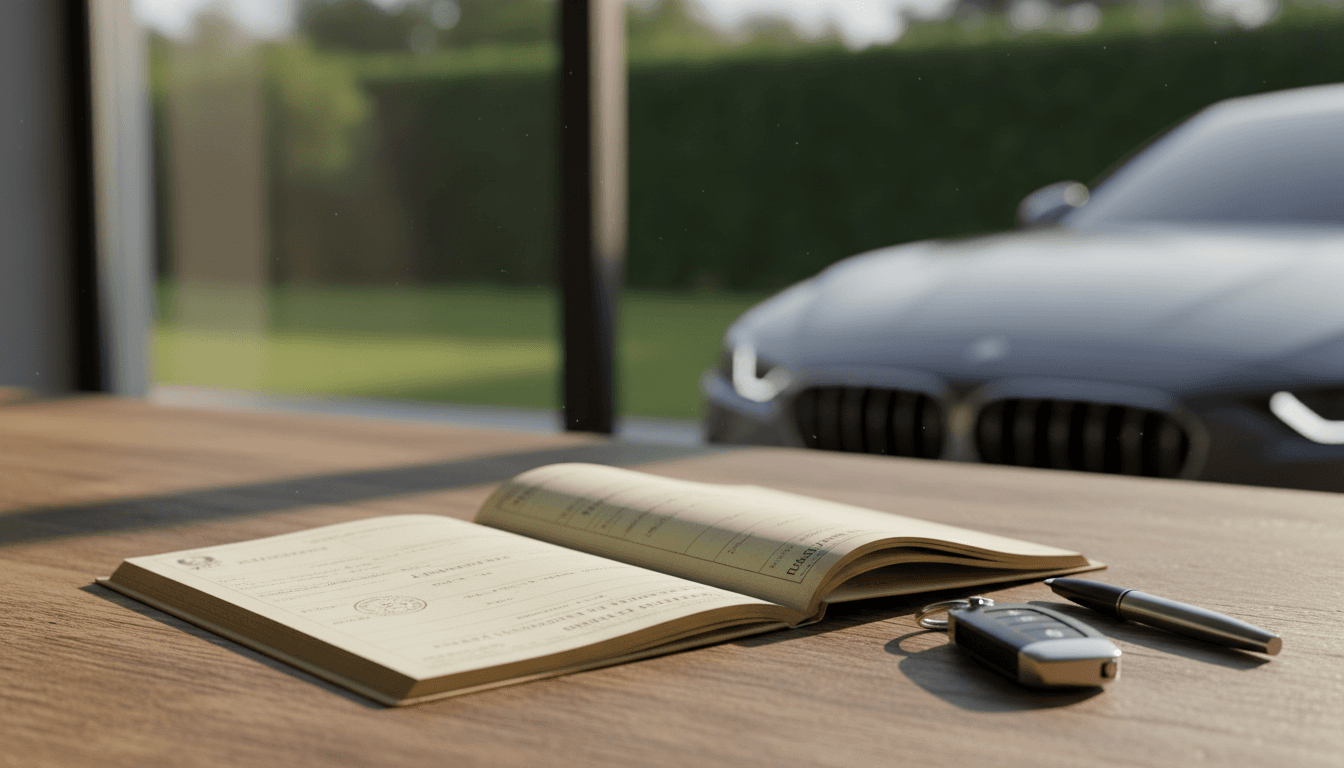
Before you buy or sell a used car or motorbike in Italy, the document that deserves your closest attention is the libretto, officially the carta di circolazione. It is full of alphanumeric codes that look cryptic, but each one answers a practical question: how many kW the vehicle really has, what Euro class it belongs to, who is registered, and whether the data matches the listing. Here is how to read it, field by field.
What the carta di circolazione is, and is not
According to LeggiOggi, the carta di circolazione is the document needed to drive on public roads with cars, motorcycles and trailers, and it certifies roadworthiness; it is not proof of ownership [3]. Ownership is proven by a different document, the certificato di proprietà. A clean libretto therefore does not show that the seller owns the vehicle: check the ownership certificate too, and make sure no administrative hold or lien weighs on it.
Codes that identify the vehicle
On the front, according to Autoblog's legend [1]:
- A: registration plate number;
- B: date of first registration, which matches field I, the registration date, noted by QuotidianoMotori [2];
- D.1: manufacturer;
- D.2: the model type code assigned by the manufacturer;
- D.3: commercial model name;
- E: chassis number (VIN);
- J: vehicle category, for example M1 for a passenger car;
- K: type-approval number.
Check that plate, chassis number and model match the listing and the numbers on the bodywork and chassis plate. A chassis number that does not match is a good reason to walk away.
Codes that affect price and tax
Here the libretto speaks directly to your wallet:
- P.1: engine displacement in cubic centimetres [1];
- P.2: maximum power in kW, not always listed [1]. This is the figure used to calculate bollo and, on powerful cars, the superbollo;
- P.3: fuel type: petrol, diesel, electric and so on [1];
- V.7: CO2 emissions [1];
- V.9: environmental class, such as Euro 4, Euro 5 or Euro 6, with the reference directive [1].
The V.9 class is decisive for traffic restrictions: if you live where older diesels are banned, it tells you whether you can drive into town. Read it before you even see the car. The kW figure matters too: higher power means a higher bollo.
Weights, seats and other technical data
- F.1 and F.2: maximum permitted laden mass, including fluids, spare wheel and approved passengers [1];
- S.1: number of seats, driver included [1];
- Q: power-to-mass ratio, useful for motorcycles [1];
- U.1: stationary noise level in decibels [1].
These matter mostly to check that modifications (wheels, exhausts, tow bars) were recorded and approved. If the car has a setup or exhaust that does not match the paperwork, ask for the documentation.
Registrant and owner: the C fields
The C fields say who appears on the document. QuotidianoMotori explains that C.1.1 to C.1.3 give the surname or company name, first name and address of the registrant when that is not the owner, as with rentals, while C.2.1 to C.2.3 are used when owner and registrant are the same person or company [2]. According to Autoblog, C.4 shows A if the registrant is also the owner and B if not [1].
If the seller is not the person in these fields, stop: it could be a company car, a rental, a lease or, worse, an irregular sale. Ask for the ownership certificate and consider checking for an administrative hold.
The back of the libretto
The back carries the legend, ownership transfers and inspection results, per QuotidianoMotori [2]. Check that inspections are regular and continuous: a gap of years between them suggests a parked vehicle or problems.
An outdated libretto can be costly
LeggiOggi notes that failing to report a change of ownership or residence in time is punished with a fine, and that whoever finds the violation withdraws the document on the spot, sending it to the Pubblico Registro Automobilistico, which returns it once the matter is regularised [3]. A buyer who does not register the transfer promptly risks trouble at the first roadside check. Note that the article dates from 2013, so amounts and procedures should be confirmed with the relevant office.
Quick checklist before buying
- Plate, chassis number (E) and model (D.1 to D.3) match the listing and the vehicle.
- Registration date (B) fits the stated age.
- kW (P.2) and fuel (P.3) checked, with an estimate of the bollo.
- Euro class (V.9) suits the areas where you will drive.
- Registrant (C) is the seller; ask for the ownership certificate.
- Inspections on the back are regular.
The takeaway: ten minutes of careful reading before negotiating avoids most unpleasant surprises. Always compare the codes against the vehicle and its other documents, and when in doubt ask a professional or ACI.
Fonti / Further reading
- Autoblog, Come leggere il libretto di circolazione auto: legenda dei codici e sigle
- QuotidianoMotori, Come si legge il libretto di circolazione dell'automobile
- LeggiOggi, Carta di circolazione e targa del veicolo: domande e risposte
Further reading
Related articles
Used Dacia Sandero: which to buy and what to check
Used Sandero: petrol, Eco-G LPG or automatic? New-car prices as a benchmark, the 2023 LPG tank recall and a checklist to avoid a bad purchase.
Used Fiat Panda: which version to choose
1.2, TwinAir or 1.0 mild hybrid: differences, indicative listing prices and the checks to make before buying a used Fiat Panda in Italy.