How Much Is My Used Car Worth? Valuation Guide
How to estimate your used car's value in five moves: Eurotax blue and yellow lists, real listings, condition, and the gap between private sale, trade-in and consignment, with concrete figures for Italy.
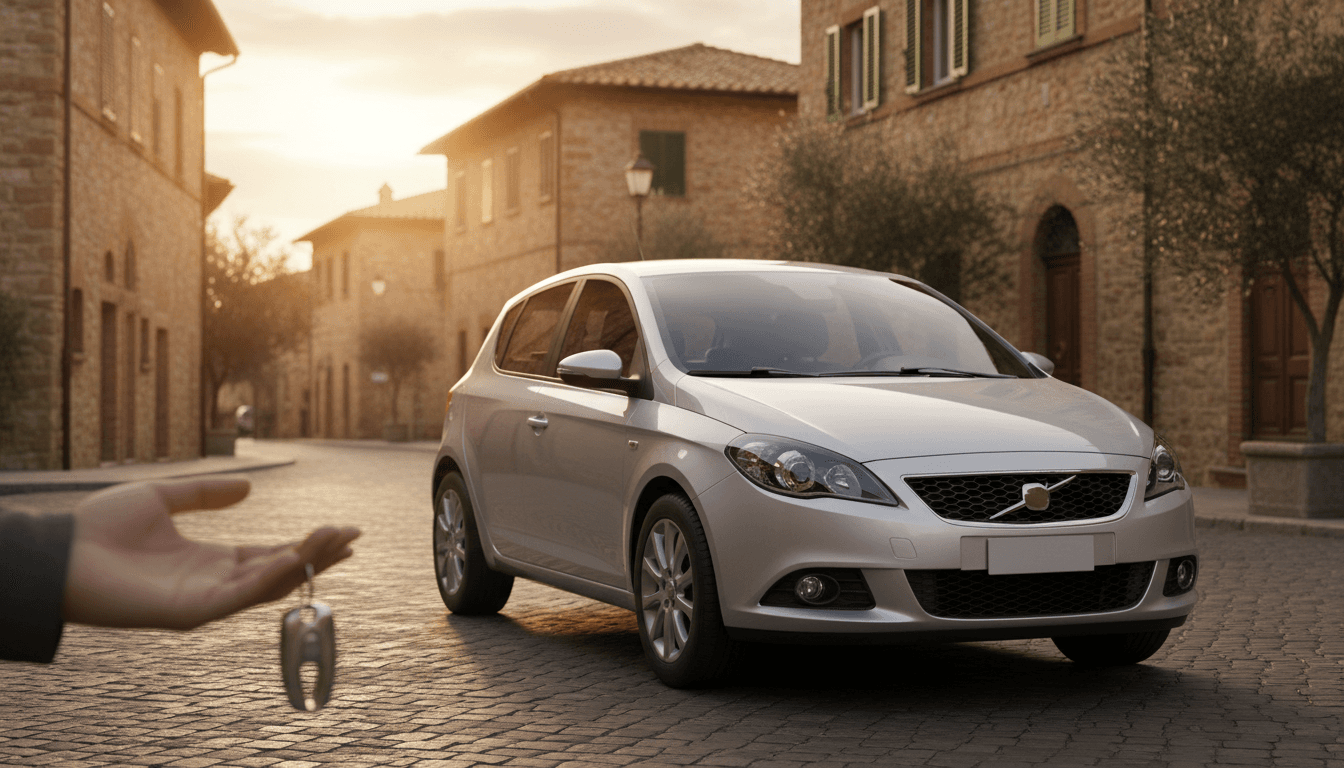
If you are about to sell, the first question is always the same: how much is my used car worth? Price it too high and the listing sits for months; too low and you hand over hundreds of euros. The good news is that you can estimate the value with a simple method in under an hour, without paying anyone. This guide explains what really matters, which tools to use and how to go from a theoretical quote to the price you will put in your ad, with a focus on the Italian market.
What drives the value of a used car
A used car's value comes from a handful of factors, and they do not all weigh the same. According to alVolante's July 2026 guide, age and mileage are the two main drivers. The guide uses an Italian average of about 15,000 km per year as a benchmark: below it, your car is worth more than average; above it, less.
Next come:
- Model and trim: a Fiat Panda with 40,000 km is quoted at around 8,500 euros, while a Volkswagen Golf in good condition ranges from 4,200 to 8,600 euros depending on year and version.
- Fuel type: hybrids (full and mild) hold their value best; diesel keeps a good percentage, but Euro 5 and older models lose value faster because of limited traffic zones in Italian cities; electric cars are the least predictable, with losses of 30-40% or more over three years.
- History: documented services, number of previous owners and a clean accident record. Even a well-repaired accident weighs on the valuation.
- Equipment: automatic gearbox, driver-assistance systems, alloy wheels, leather seats, dual-zone climate control and LED headlights make a difference; neutral colours (grey, black, white) sell faster.
How depreciation works
A car does not lose value in a straight line. The curve is steep at first and then flattens. Per alVolante, a car loses about 10% right after purchase and about 25% in its first year. A concrete example: a car bought new for 25,000 euros is typically worth between 12,500 and 15,000 euros after three years.
That is why two- or three-year-old cars are so popular: the first owner has already paid most of the depreciation. It also means that on a very recent car every extra month of waiting costs you little, while on a ten-year-old car the curve is so flat that price moves mostly with condition and mileage.
Step 1: get a starting quote
The starting point is a price guide. In Italy the historic reference is Eurotax, a list professionals use to estimate market value. As Automobile.it explains, its quotes come from market surveys updated roughly every two months, with data gathered from official dealers, manufacturers and trade associations.
There are two readings of the same list:
- Blue list: what a dealer would be willing to pay to buy your car.
- Yellow list: what a private buyer would pay to buy it from a dealer. It is higher because it includes the dealer's running costs and margin.
Understanding this difference is key: if you sell to a private buyer, your realistic price sits between blue and yellow, not above yellow. Querying Eurotax directly is paid (the article mentions a few euros per lookup), but Automobile.it offers a free tool based on Eurotax quotes, and alVolante offers one developed with Subito Motori.
A practical tip: use at least two tools and compare. The most reliable ones combine algorithms with millions of real listings and actual sales, while simple free tools use only make, model and year. No online tool can judge the physical state of the car, though: the result is a market estimate, not an appraisal.
Step 2: compare with real listings
The quote is theoretical; the market is what you see in the ads. Search for cars identical to yours (same model, engine, year and similar mileage) in your area and look at three things:
- the asking price, remembering that the final sale price is almost always lower;
- how long the ad has been online: if it has been there for two months, the price is probably too high;
- how many similar ads exist: plenty of supply pushes prices down, scarce supply supports them.
Write down a range, not a single number. For example: cars like yours are listed between 7,800 and 9,200 euros, but the ones sitting for weeks are at the top of the scale.
Step 3: adjust for real condition
Now look at your car with a buyer's eyes. Bodywork and interior condition, documented maintenance, tyres and known defects all move the price. Before setting the figure:
- gather the service invoices: many buyers ask for them before even viewing the car;
- check that everything works (navigation, A/C, parking sensors, rear camera): per alVolante, a broken feature lowers value more than a missing one;
- consider small touch-ups: professional interior and exterior cleaning costs about 80-150 euros, and targeted repair of scratches and dents can raise the valuation by 5-10%;
- if repairs would cost more than 50% of the market value, it is better to sell the car as it is.
Private sale, trade-in or consignment: how proceeds change
The value of your car is not a single number: it depends on how you sell. Dealer trade-in offers are typically 10-20% below what a private buyer would pay. With a private value of 8,000 euros, the trade-in might be between 6,400 and 7,200 euros. The reason is that the dealer must cover checks, reconditioning, warranty and commercial margin, as AutoScout24 explains.
There are three main routes:
- Private sale: pays more (alVolante speaks of 15-25% more) but takes time for the ad, negotiation and paperwork.
- Trade-in (permuta): the value of your old car is deducted from the price of the new one. It is convenient, but value the two amounts separately so the overall discount does not confuse you.
- Consignment (conto vendita): the dealer sells on your behalf and keeps a commission. It can pay more than a trade-in, but timing is less predictable.
One detail that often goes unnoticed: when you sell to a dealer, they must offer the next buyer the legal conformity warranty, which lasts two years and can be reduced by agreement to no less than one. That is one of the costs weighing on their offer.
Paperwork and transfer of ownership
Once the price is set, prepare your documents: ID, tax code and the Documento Unico di Circolazione e di Proprietà (for some older cars the registration certificate and ownership certificate still apply until the first operation that requires the single document). According to ACI, the transfer of ownership must be registered within 60 days of the authentication of the seller's signature. Before handing the car over, tell your insurer to suspend, transfer or close the policy, and always make sure the payment is traceable.
The takeaway: five moves
- Collect year, mileage, trim, number of owners and service history.
- Get two online quotes and compare them with the blue and yellow lists.
- Look at at least ten identical listings and note the range.
- Adjust for condition and equipment, then add a small negotiation margin.
- Choose the channel: private sale if you have time and a tidy car, trade-in if convenience matters.
List at a price slightly above your target but inside the market range: it is the simplest way to avoid leaving money on the table while still selling in a reasonable time. Quotes change, so check the figure again just before you publish.
Fonti / Further reading
- alVolante, how much your used car is worth (16 July 2026)
- AutoScout24, selling a used car to a dealer (27 May 2026)
- Automobile.it, Eurotax valuation (16 March 2021)
- alVolante, trade-in: private or dealer (27 March 2024)
Further reading
- Auto usate, crollo per elettriche e vecchi diesel: ecco quanto vale la tua — alVolante
- Vendere l'auto usata al concessionario: quando conviene e come funziona — AutoScout24
- Valutazione auto Eurotax — Automobile.it
- Permuta auto usata: privato o concessionario? Vantaggi, procedure e tipologie — alVolante
Related articles

BYD's 2026 Bonus: Up to €11,600 Off, Worth It?
In September 2026 BYD launched its own trade-in bonus worth up to €11,600, filling the gap left by Italy's exhausted state EV incentives. Here is how the scheme really works, and when selling your old car privately beats trading it in.

Italy's Used Car Market 2026: The Real Data
UNRAE's August figures show a used-car market that is flat on the surface but split underneath: diesel still at 42.9%, hybrids growing fast, and almost half of all cars traded are over ten years old. Here is what it means for sellers and buyers.