Dacia Hipster: What We Actually Know About Europe's Cheapest EV (and Why You Shouldn't Wait for It)
Mid-August 2026 brought the most concrete details yet on the Dacia Hipster, the sub-15,000-euro electric microcar. Here is what is confirmed, what is still a guess, and why buyers today already have better options.
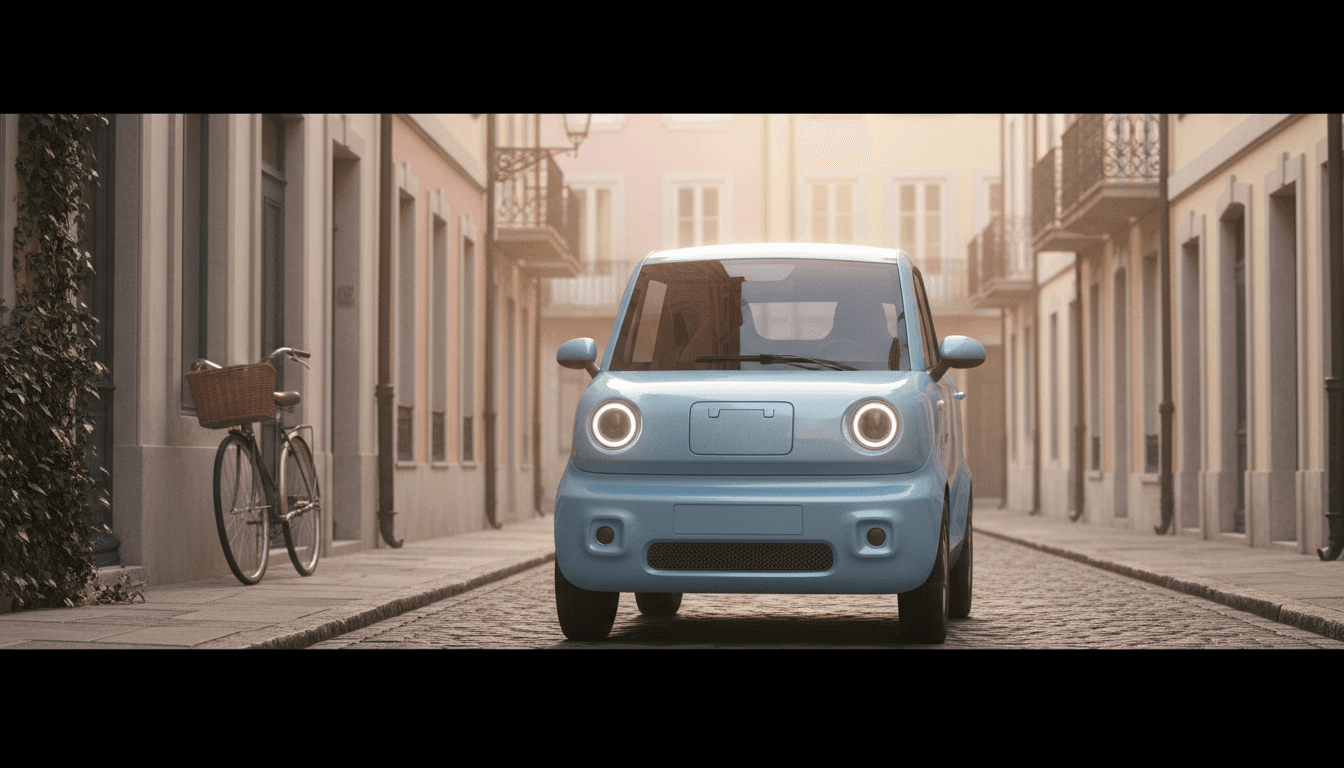
A Sub-15,000-Euro EV: What Dacia Has Actually Confirmed
On August 18, 2026, Italian automotive magazine Quattroruote published the most concrete details yet on the Dacia Hipster, the electric microcar the Romanian brand is positioning as the future cheapest car in Europe: four real seats packed into just 3 meters of length, with a starting price pitched below 15,000 euros. This is not the first time the Hipster has made headlines. The concept was unveiled in late 2025 and shown to the public at the Brussels Motor Show 2026 alongside Dacia's refreshed lineup. But it is the first time the technical details have started reading like a real production plan rather than a styling exercise.
It is worth separating what Dacia has actually confirmed from what remains an estimate from the trade press, because the gap between the two changes the verdict on this car considerably, especially for anyone deciding whether to wait for it or buy today.
The Dimensions, and What Fits Inside
The concept's official figures put it at 3.00 meters long, 1.55 meters wide and 1.53 meters tall: shorter than a Fiat Panda (3.70 m), yet with four genuine seats, not two. The boot ranges from 70 to 500 liters thanks to folding rear seats, a surprising capacity for a car this compact and explicitly built for city use.
The weight is under 800 kg, 20 percent lighter than the Dacia Spring, already the lightest and cheapest EV sold in Italy today. Less weight means less energy burned per kilometer and, in theory, fewer raw materials to mine and process to build it: that is one of the reasons the price can drop this far below mainstream electric cars.
Battery and Range: Where the Sources Disagree
This is the point where estimates diverge. Dacia states a claimed range of up to 200 km from a compact lithium battery under 20 kWh. Several independent outlets scale that figure down to around 150 km in real conditions, a range that still suits city driving but sits well below a mainstream city car like the Renault Twingo E-Tech Electric, which claims 263 km WLTP from a 27.5 kWh LFP battery at a price between 19,500 and 21,100 euros. The price gap between the two cars, roughly 5,000-7,000 euros, is explained almost entirely by battery capacity: fewer kWh, cheaper cells, a lower final price.
The Detail Most Coverage Glosses Over: It Is Not a Supermini, It Is a Quadricycle
Here is the part that a lot of Hipster coverage plays down. To stay under 15,000 euros, the production version will most likely be homologated as a heavy quadricycle under category L7e, not as a full M1 passenger car. In practice that caps power at 15 kW, roughly 20 hp, limits top speed to 90 km/h, and keeps the unladen weight, excluding the battery, at no more than 450 kg.
The upside of that classification is that the Hipster could be legally driven from age 16 with an Italian B1 license as well as a standard B license, opening the car up to a younger buyer than a conventional EV would reach, similar to today's electric mopeds. The downside worth keeping in mind is that this is still a vehicle designed for city streets and low-speed rural roads, not for the motorway or long trips. That is not a hidden flaw; it is the engineering trade-off that makes the price possible. But it matters before treating the Hipster as a direct replacement for a conventional supermini.
When It Actually Arrives (and What It Will Actually Cost)
Despite the press enthusiasm, the real timeline is less immediate than the wave of 2026 headlines suggests. Final approval for the project was expected in the second quarter of 2026, and if confirmed, the production Hipster would not reach the market before late 2027. The price also remains a range rather than a fixed number: Dacia communicates a target below 15,000 euros, but some independent estimates put the entry version closer to 12,000-13,000 euros before options and accessories.
Production would be handled by eGT New Energy Automotive, the Chinese joint venture between Renault, Nissan and Dongfeng that already builds the Dacia Spring: the same plant, the same supply chain, the same industrial logic that made the Spring's aggressive price possible in the first place.
The Context: What a Genuinely Cheap New Car Costs Today
While everyone waits for the Hipster, it is worth looking at what the Italian market already offers under 15,000 euros. The petrol-powered Dacia Sandero remains, in practice, the only new M1-homologated car in this price bracket, with the 1.0 SCe Essential trim starting at 13,950 euros. It is no coincidence the Sandero was the fourth best-selling car in Italy in the first half of 2026, with 22,163 registrations. That is a clear signal of how tight demand is for a genuine new car under this price threshold, electric or not.
What This Means for Buyers (and Sellers) Today
For anyone planning to wait for the Hipster before changing cars, the math is straightforward: this is a vehicle at least a year away, with an estimated real-world range around 150 km and a 90 km/h speed cap, characteristics very different from a mainstream electric supermini. On the used market, first-generation A- and B-segment EVs such as the Dacia Spring, Fiat 500e and early Renault Twingo E-Tech units already sell today at prices competitive with what the Hipster promises for 2027, without a quadricycle's power and speed restrictions.
The lesson from the Hipster, even before it arrives, is that the entry-level EV segment is splitting in two: rock-bottom microcars built purely for urban mobility on one side, and mainstream city cars like the Twingo that cost more but remain usable everywhere on the other. Anyone who needs a real car, one that can also leave the city, is better off shopping the used listings already available today on platforms like VendiVoce rather than waiting for a vehicle that, by design, is built to do something else.
Sources / Further reading
[1][2][3][4][5][6]
Further reading
- Dacia Hipster: l'elettrica da 15.000 euro con quattro posti in appena 3 metri — Quattroruote
- Dacia Hipster, via libera per il cubo elettrico sotto i 15.000 euro — ClubAlfa
- Dacia Hipster, la mini elettrica da 13.000 euro esce allo scoperto: 4 posti e si guida a 16 anni — Automoto.it
- Dacia Hipster, la microcar elettrica da 15.000 euro — Auto.it
- Le 9 auto che costano meno di 15.000 euro ad aprile 2026: da Renault Clio a Grande Panda — Everyeye Auto
- Renault Twingo E-Tech Electric 2026: prezzo, autonomia e confronto con BYD Dolphin Surf e Leapmotor T03 — M3 Motorcube
Related articles
BYD's 2026 Bonus: Up to €11,600 Off, Worth It?
In September 2026 BYD launched its own trade-in bonus worth up to €11,600, filling the gap left by Italy's exhausted state EV incentives. Here is how the scheme really works, and when selling your old car privately beats trading it in.

Italy's Used Car Market 2026: The Real Data
UNRAE's August figures show a used-car market that is flat on the surface but split underneath: diesel still at 42.9%, hybrids growing fast, and almost half of all cars traded are over ten years old. Here is what it means for sellers and buyers.