Cupra Raval Italian Pricing: The Gap Between List and Promo Says More Than the Spec Sheet
Up to 226 hp, a 52 kWh battery and a claimed 446 km from a 4.04-metre hatchback. The most revealing number in the Italian price list, though, is the gap between full and promotional pricing, which exceeds 8,000 euros on one version.

A compact EV entering a crowded field
The Cupra Raval reaches the Italian market at a moment when the compact electric segment is the most fiercely contested of all. Its dimensions are well judged for European use: a hatchback measuring 4.04 metres, easily manageable in town without being a microcar. Beneath the floor sits a 52 kWh battery, rated for up to 446 kilometres, while the available powertrains produce between 211 and 226 horsepower [1][2].
Those figures put the Raval in an unusual position: city-car dimensions with hot-hatch power. It is a positioning choice consistent with the brand's identity, but it needs reading alongside the pricing to understand who the car is actually for.
The Italian price list, version by version
This is where it gets interesting, because the headline entry price and the actual figures for individual versions tell two different stories.
The Launch Edition versions available from launch break down as follows [1]:
- Launch Edition: list price 36,120 euros, promotional price 29,950 euros.
- Edge Plus: list price 38,120 euros, promotional price 31,950 euros.
- VZ Manganese: list price 47,770 euros, discounted price 39,950 euros.
The promotional entry point therefore starts at 31,950 euros for the most accessible configuration currently orderable, while a base variant with 116 horsepower at roughly 26,000 euros is expected in autumn 2026 [1].
The figure that actually matters: the gap
Looking at that table, the most instructive number is none of the prices individually but the difference between list and promotional pricing. On the Launch Edition the gap is 6,170 euros; on the VZ Manganese it widens to 7,820 euros.
A gap of that size, applied from launch, says something specific about the segment: competition among compact EVs is now such that the list price functions more as a nominal reference than an expected transaction price. For buyers, the practical consequence is that list pricing is not a credible starting point for assessing value, and comparisons should always be made on the prices actually being offered.
There is a medium-term consequence for the used market too. Residual value is traditionally calculated as a percentage of the price paid rather than the theoretical list price. Someone who buys a car listed at 36,120 euros for 29,950 starts from a different base than someone who pays full price, and that will shape how second-hand valuations read a few years from now.
What to expect from the base version
The 116-horsepower variant due in autumn at around 26,000 euros [1] is probably the most significant for volume sales, and deserves some thought.
Almost exactly halving the power relative to the launch versions changes the car's character, though not necessarily for the worse in real-world use: on a four-metre compact driven mostly in town and on secondary roads, 116 horsepower is more than adequate, and lower output tends to bring better efficiency and therefore competitive real-world range. What will need checking, once official figures arrive, is whether the base version keeps the same 52 kWh battery or adopts a smaller pack. That single detail determines whether 26,000 euros is a bargain or a compromise.
How to read it if you follow the used market
For anyone uninterested in new cars but tracking the second-hand market, a launch like this has indirect effects worth anticipating.
A new model entering a crowded segment with aggressive promotional pricing tends to push down valuations of compact EVs already on the market, simply by widening supply against unchanged demand. The effect is neither immediate nor dramatic, but in the months after a launch with substantial discounts, anyone selling a two- or three-year-old compact EV finds themselves competing against a brand-new car, under warranty, at a smaller price gap than before.
For used buyers the logic inverts: this is the moment to check what the new alternative genuinely costs before committing to a recent second-hand car, because the gap may have narrowed more than instinct suggests.
The bottom line
The Cupra Raval brings Italy a compact EV with solid technical numbers: 52 kWh, up to a claimed 446 kilometres and outputs reaching 226 horsepower in a 4.04-metre body. But the most useful reading of its commercial debut lies in the structure of the price list. Launch discounts above 6,000 euros across every version signal a segment where full price has become theoretical. Anyone weighing a purchase, new or used, would do better to start there rather than with the spec sheet, and to wait for official figures on the base version before drawing conclusions about value.
Further reading
- Quotidiano Motori, Cupra Raval 2026: all the Italian prices for the electric compact, 2026
- Quattroruote.it, Cupra Raval: up to 226 hp and prices from 26,000 euros, April 2026
- alVolante.it, Cupra Raval price list, specifications and consumption, 2026
- Quotidiano Motori, Cupra Raval: price and characteristics of the dynamic electric city car, 2026
- Il Fatto Quotidiano, Cupra Raval: road testing the electric city car, May 2026
Further reading
- Cupra Raval 2026, tutti i prezzi per l'Italia della formidabile compatta elettrica — Quotidiano Motori
- Cupra Raval, l'elettrica tutto pepe: fino a 226 CV e prezzi da 26 mila euro — Quattroruote.it
- Listino Cupra Raval: prezzo, scheda tecnica, consumi — alVolante.it
- Cupra Raval, prezzo e caratteristiche della citycar elettrica e dinamica — Quotidiano Motori
- Cupra Raval, la prova su strada della citycar elettrica — Il Fatto Quotidiano
Related articles
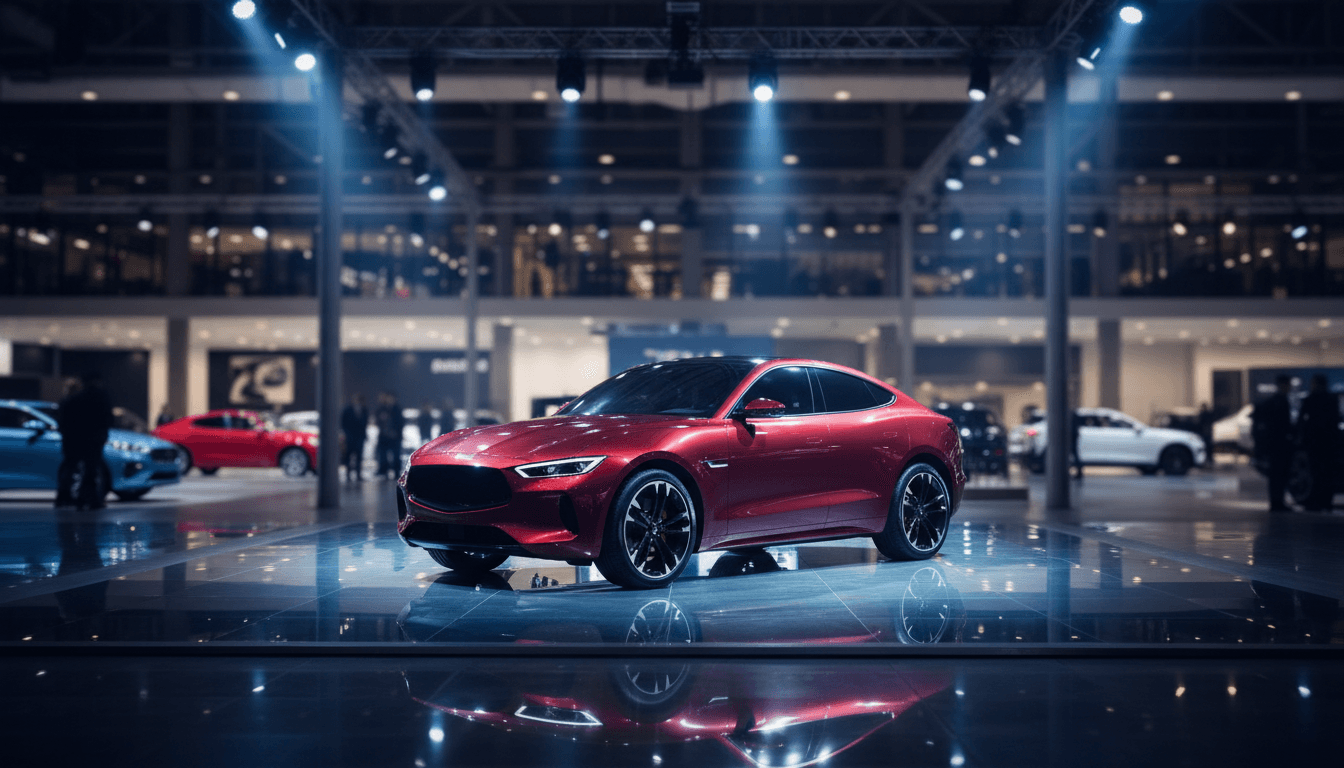
Itala 56: Italy's China-Built SUV, Price and Red Flags
At the Turin Motor Show 2026, the Itala 56 debuts: a euro49,000 coupe-SUV reviving a historic Turin badge on a Chinese platform, built by DR Automobiles. What to check on origin, a past antitrust fine, and resale value before you sign.

The Lamborghini Temerario Joins Italy's Police Fleet: What It Means for the Used Exotic Car Market
On September 4, 2026, Italy's State Police received its first hybrid Lamborghini Temerario, a 920-hp supercar. We trace twenty years of Lamborghinis in uniform and explain why stories like this keep Italy's used exotic-car market alive, from the Gallardo to the Huracan.