Classic Car in Italy: ASI, CRS, Tax and Insurance
What the ASI CRS is, what it costs, why insurers require it and where the road-tax saving must be verified before buying a classic.
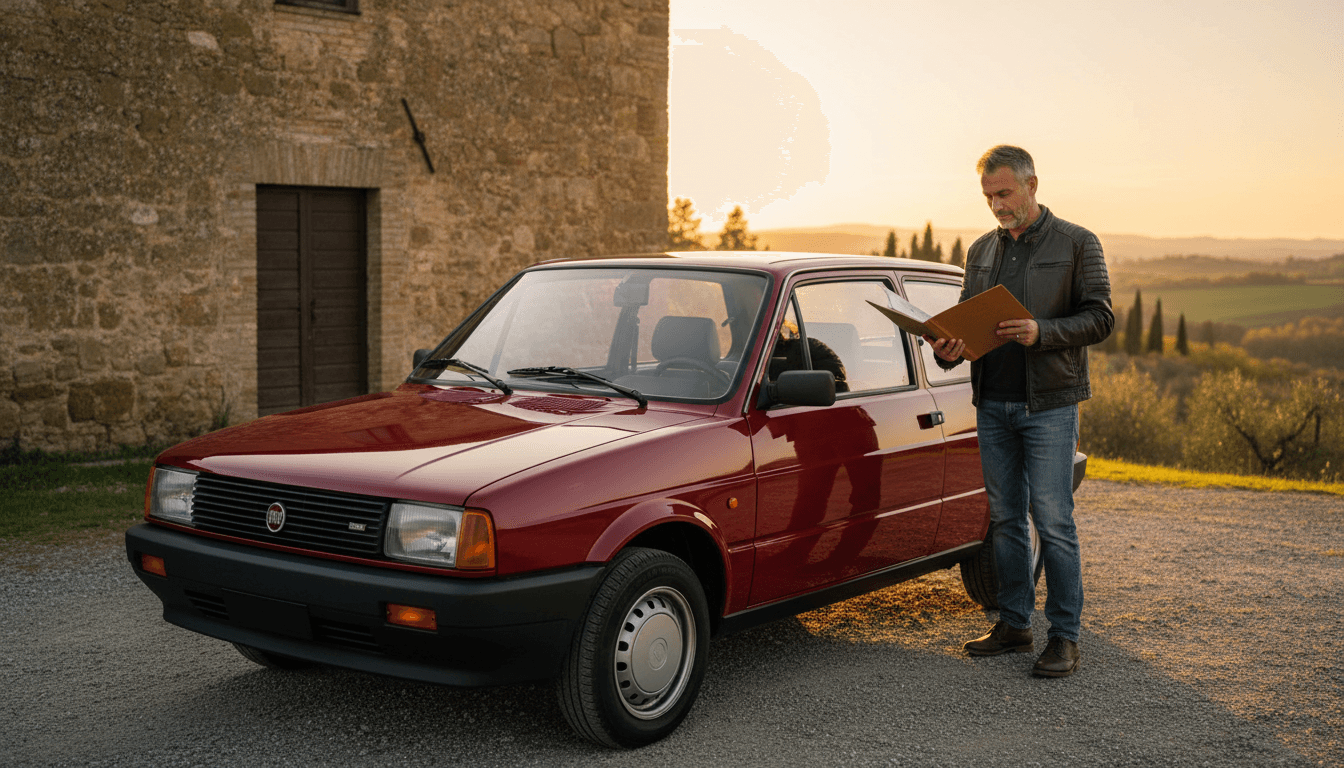
Buying a car that is 25 or 30 years old is many enthusiasts' dream, but the acronyms make it easy to get lost: ASI, ACI Storico, CRS, gold plate, reduced road tax, classic-car insurance. This guide explains what the Certificate of Historical Relevance really does, what it costs, why insurers ask for it and where the road-tax saving needs checking case by case. The available sources are partly dated and Italian rules on bollo have changed over the years, so every figure should be confirmed with ASI, a federated club and your region before you buy.
ASI, ACI Storico and the CRS
Italy has two main registers for historic vehicles: one run by ASI (Automotoclub Storico Italiano) and one by ACI. The key document is the Certificato di Rilevanza Storica, or CRS, issued by ASI after an inspector examines the vehicle and attests authenticity, condition and originality. Once granted, the CRS is annotated on the registration document.
Some sources suggest ASI is the best-recognised reference: a reader account collected by Motorbox says many insurers accepted only ASI certification, not ACI registration. That is a single case, not a statistic, but it is a good reason to ask your insurer which document it accepts before choosing a route.
What it costs and how long it lasts
Be cautious with numbers. The sources consulted indicate:
- around 20 euro for the CRS, according to one guide;
- membership of an ASI-federated club as a separate cost, with fees the sources place under 50 euro a year (one mentions about 42 euro);
- a CRS validity of 10 years, according to Investireoggi.
These are indicative: some guides are a few years old, and there may be admin fees, the inspector's visit and renewals. Ask your provincial club for a full quote.
Road tax: the saving is not automatic
This needs the most care, because the rules have changed several times. Sources describe this general picture:
- for ASI-registered vehicles 20 to 29 years from first registration, bollo used to be halved; articles with titles like stop to reduced bollo have since circulated, so check current official sources;
- for vehicles over 30 years old, treatment depends on regional law: some regions offer reductions or exemptions, others do not.
Before buying, check your region's or ACI's website and get written confirmation. Do not assume the tax will drop: calculate the saving on firm figures, not hearsay.
Classic-car insurance
According to the sources, almost all insurers require the CRS to write a classic-car policy. These policies often carry usage limits: annual mileage caps, no daily use, a garage requirement and sometimes a second everyday vehicle. In return the premium can be lower than a standard policy, but savings are not guaranteed: one reader quoted by Motorbox reports paying 630 euro a year, more than the 546 euro bollo he hoped to cut. Compare several quotes and read the usage conditions carefully.
The gold plate
The targa oro is a recognition ASI gives to historic vehicles that already hold the CRS and meet certain requirements. It is a mark of distinction, not to be confused with road tax or insurance. For current requirements, ask ASI or a federated club.
Buying a classic: the checklist
- Ask whether the car already has the CRS annotated on its registration document and whether it is still valid.
- Check that chassis and engine numbers match the papers: a PRA search helps rule out liens or administrative holds.
- Verify originality of engine, bodywork and interior: modifications can jeopardise the CRS.
- Look for rust and poor repairs in structural areas.
- Ask for documented history: invoices, photos, previous plates.
- Compare the price with similar cars in your area and factor in any work needed.
When it makes sense and when it does not
A classic suits you if you drive few kilometres, use it for pleasure, have a place to store it and accept the policy's usage limits. It does not suit you as a daily driver: the special insurance and restrictions will get in the way, and the bollo saving is not guaranteed. A well-kept classic can hold its value, but it should not be bought as a safe investment.
The takeaway
Before buying, confirm three things in writing: whether the car already has the CRS, what your insurer requires to cover it and which bollo you would pay in your region. With those three numbers you can work out the real cost and decide with your head, not only your heart.
Further reading
- Motorbox, Auto storica: pro e contro del registro ACI vs il CRS ASI
- Segugio.it, Auto e moto storiche under 30: stop al bollo ridotto?
- Facile.it, Iscrizione ASI: come e perché richiederla
- Motor1 Italia, Iscrizione ASI auto: come si fa e quanto costa
- Sicurauto, Assicurazione auto storiche: come funziona, vantaggi e prezzi
- Investireoggi, Il certificato che cancella il bollo per 10 anni
Further reading
- Auto storica: pro e contro del registro ACI vs il CRS ASI — Motorbox
- Auto e moto storiche under 30: stop al bollo ridotto? — Segugio.it
- Iscrizione ASI: come e perché richiederla — Facile.it
- Iscrizione ASI auto, come si fa e quanto costa — Motor1 Italia
- Assicurazione auto storiche: come funziona, vantaggi e prezzi — Sicurauto
- Il certificato che cancella il bollo per 10 anni — Investireoggi
Related articles

Classic cars in Italy: road tax, ASI, insurance
From 30 years a classic car is exempt from bollo; at 20 to 29 you need the CRS for 50% off. What ASI registration is, what it costs, how classic insurance works and what to check before buying.

Classic Maserati Prices in 2026
A new Hollywood biopic and the Trident's 100th anniversary are reviving interest in classic Maseratis. Here is what a vintage Maserati actually costs in Italy today, from an entry-level Biturbo to collector-grade icons, and what buyers need to know about certification, historic plates and road tax.