Car ownership transfer in Italy 2026: costs
Fixed fees, kW-based IPT tax, provincial surcharge, agency or DIY: how the cost of transferring a used car in Italy is built, with examples and the 60-day deadline.
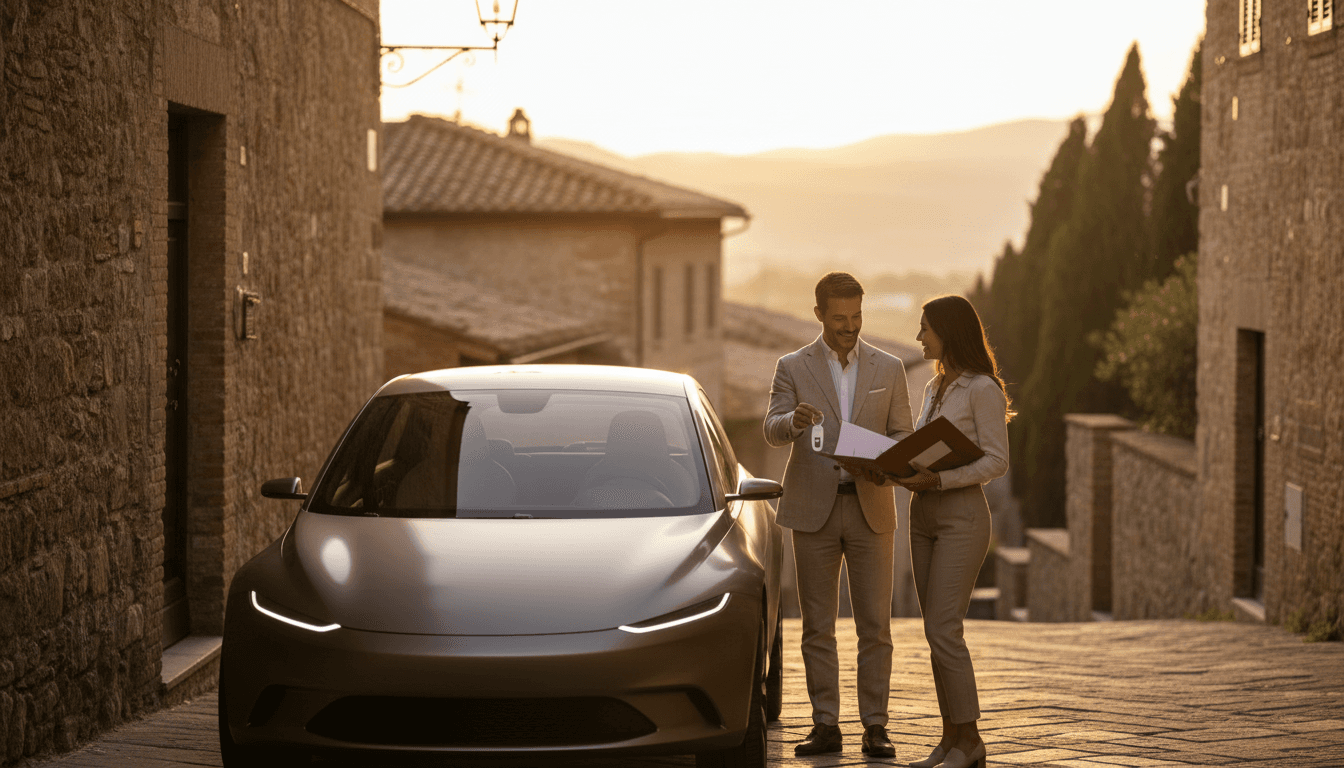
Transferring ownership of a used car in Italy has no single price: part of the bill is fixed nationwide, and the rest depends on the car's power in kW and the province where the buyer lives. Knowing how the total is built helps you negotiate and shows how much you can save by handling the paperwork yourself. The figures below come from the main Italian guides published in 2026; always check your province's rate with ACI or at the counter before paying. [1][2]
The two parts of the cost
The total is a fixed fee plus the IPT (Imposta Provinciale di Trascrizione, the provincial registration tax). The fixed part is the same from Milan to Palermo. The IPT grows with engine power and can carry a provincial surcharge, which is why the same Fiat Panda costs less to register in one province than in another.
The fixed fee: about 85 to 101 euros
The usual components are:
- ACI-PRA fees: 27 euros;
- Motorizzazione (vehicle licensing office) rights: 10.20 euros;
- stamp duty on the unified application: 32 euros;
- stamp duty on updating the Documento Unico (the single vehicle document): 16 euros;
- stamp duty for authenticating the seller's signature: 16 euros.
Without signature authentication that is about 85.20 euros; with it, about 101.20 euros. Some guides group the items differently and show slightly different totals, but the order of magnitude is the same. [1][3]
The IPT: the variable part
For cars up to 53 kW (roughly 72 hp) the base IPT is quoted at 150.81 euros. Above 53 kW the amount rises in proportion to kW, at roughly 3.5 euros per kW according to the guides we read, though sources do not agree to the cent on the exact method. Provinces may then raise the tax by up to 30%, and many apply the full increase. With the maximum surcharge the base IPT up to 53 kW reaches about 196 euros. [1][2]
One detail trips people up: what counts is the kW figure on the registration document, not horsepower. And the tax is owed to the province where the buyer lives, not the seller.
What it costs in practice
With the maximum provincial surcharge, a July 2026 guide estimates about 297 euros for a 50 kW city car, about 495 euros for an 85 kW saloon or crossover, and about 796 euros for a 150 kW SUV. With no surcharge, a small car up to 53 kW starts around 250 euros. A 1.2 petrol Panda typically falls between 250 and 300 euros depending on the province. [1][3]
So the cost climbs steeply with power: for the same purchase price, a 150 kW car can carry a transfer bill roughly three times that of a small one. If you are torn between two models, add this line to the comparison.
Agency or do it yourself
A car-paperwork agency usually adds 50 to 150 euros in fees, while going straight to a Sportello Telematico dell'Automobilista (STA) or an ACI office leaves only taxes and duties. Agencies suit people short on time; if your documents are in order, doing it yourself can save 100 to 200 euros. [1][4]
The procedure step by step
- Sale agreement: buyer and seller sign. With a private seller, use a written contract.
- Authenticating the seller's signature: at an STA counter, an agency, or the town hall (many large cities offer it, with only the 16-euro stamp to pay).
- Filing: at an STA, an ACI office or through an agency, with the registration document or Documento Unico, and ID and tax code for both parties.
- Payment: fees, IPT and stamps, mostly through PagoPA.
- Document update: the Documento Unico is reissued in the new owner's name.
The 60-day deadline and fines
Registration with the PRA must be requested within 60 days of the seller's authenticated signature. Miss it and Article 94 of the Highway Code sets an administrative fine of 363 to 1,813 euros. Late IPT payment adds a penalty and interest. [3][4]
Also remember that until the transfer is complete the seller stays registered owner and can be chased for road tax, fines and liability. It is in everyone's interest to close the file quickly.
Before you buy
- Work out the transfer cost from your car's kW and your province before agreeing a price.
- Agree who pays what and put it in writing: it is usually the buyer, but it is negotiable.
- Check there is no administrative lien or mortgage on the car.
- If you are selling, never hand over the keys before the signature is authenticated.
Bottom line
For a city car, expect roughly 250 to 300 euros; for a powerful car it can top 700 to 800. Doing it yourself saves the agency fee, provided your paperwork is complete. Whoever buys or sells, note the 60-day deadline and never leave the file half done.
Further reading
- Money.it, Passaggio di proprietà auto 2026, costi aggiornati e come risparmiare.
- Segugio.it, Passaggio di proprietà auto: i costi per il 2026.
- Alvolante, Passaggio di proprietà auto 2026: i costi aggiornati e come farlo.
- StudioCataldi.it, Passaggio di proprietà auto: ecco l'iter da seguire.
Further reading
Related articles

Buying a used car privately in Italy: steps and scams
How to buy a used car from a private seller in Italy safely: listing checks, PRA search, test drive, safe payment, bill of sale and the ownership transfer within 60 days.
Motorcycle Ownership Transfer in Italy: Costs
How a motorcycle ownership transfer works in Italy: documents, the 60-day deadline, ACI fees, stamp duty, province-dependent IPT, DIY versus agency, and mistakes to avoid.