Buying a Classic Car in Italy: Tax, CRS & ZTL 2026
Before buying or selling a classic car or motorcycle in 2026, here is what the Certificate of Historic Relevance actually does, where a tax exemption still won't get you into a ZTL, and what you genuinely save on insurance.

Buying a classic car in Italy: the first question isn't the price
Anyone browsing a listing for a car or motorcycle over 20 years old tends to ask straight away whether it's a good deal. The more useful question is different: does the vehicle already carry a Certificate of Historic Relevance (CRS), and whose name is it under? That single document decides what road tax you'll owe, what insurance you can buy, and even where you're allowed to drive. The topic resurfaced on September 8, 2026, when Sky TG24 reported that Forza Italia, through deputy prime minister Antonio Tajani, revived a proposal to scrap Italy's annual car tax altogether in the 2027 budget: a tax worth roughly 7.5 billion euros a year to Italy's regions, so far from simple to cancel without finding funding elsewhere. It remains a political proposal, not a law, and in the meantime the real 2026 rules are what actually matter to anyone buying or selling a classic right now.
Two age thresholds that actually matter
Past 30 years from first registration, a vehicle enrolled with ASI (Automotoclub Storico Italiano) or an equivalent marque register (Lancia Storica, Italia Fiat, Alfa Romeo Storica, or FMI for motorcycles) is automatically exempt from the ordinary road tax, with no application required. The only obligation, if the vehicle is actually driven on public roads, is a flat annual fee: 31.24 euros in most regions, dropping to 25.82 euros in Valle d'Aosta, Trento, Bolzano, Friuli Venezia Giulia, Emilia-Romagna, Umbria, Basilicata, Sicily and Sardinia.
Between 20 and 29 years, the full tax remains due unless the vehicle carries a CRS noted on its registration document, in which case a 50% reduction applies. Without that annotation, a 22-year-old car pays exactly what a modern car of the same power output pays, however historic it looks.
The CRS certificate: the document that decides everything
The Certificato di Rilevanza Storica is issued by ASI, or by a marque-specific federated club, for vehicles over 20 years old that have been formally deregistered from Italy's Public Vehicle Register. Getting registered and certified costs around 100 euros altogether, split between the ASI membership fee (roughly 41 euros a year) and the local club's own fee. It's valid for 10 years, but here's the detail buyers often discover too late: it has to be reissued on every change of ownership, so if you buy a used classic and the CRS is still in the seller's name, it does not apply to you until you update it. The same certificate also covers the mandatory roadworthiness inspection, still required every two years for historic vehicles as for any other, with the CRS as the one extra document requested at the test.
Regional differences, briefly
Tax breaks aren't uniform across Italy because the road tax itself is administered region by region. Lombardy and Emilia-Romagna, for instance, extend a full exemption from age 20 for CRS-holding vehicles, going beyond the 50% national baseline. Veneto instead applies a reduction of up to 75%. Anyone buying a classic registered in a different region should check their own region of residence's official rules directly, since that's where the tax is owed, not wherever the vehicle was originally registered.
A tax exemption is not a pass into low-traffic zones
A common mix-up among first-time classic car buyers: assuming a tax break also means free rein to drive anywhere in a city center. It doesn't. Low-traffic zones (ZTL) and anti-smog restrictions are set by individual municipalities, entirely separate from the regional road tax, and each city decides for itself whether and how classic vehicles get in. In Bologna, as of January 1, 2026, even non-resident hybrid cars lost access to the historic center's ZTL, let alone a 30-year-old petrol car without a specific exemption. Veneto moved the opposite way: from August 8, 2026, it introduced an exemption from regional anti-smog restrictions for CRS-certified historic vehicles, but that carve-out covers pollution-related blocks only, not municipal ZTLs or pedestrian zones, and it can still be suspended on smog-alert days. Always check the specific municipality's ordinance before planning a city-center drive in a classic, rather than assuming the regional tax rule covers you.
What insurance actually costs
Historic registration pays off on liability insurance too: policies designed for ASI-registered vehicles can run up to 70% cheaper than a standard policy, often with a fixed bonus-malus class and cumulative rates for collectors who own several vehicles. In exchange, insurers almost always cap annual mileage and restrict use to rallies, shows and occasional outings rather than daily driving. Since 2026, seasonal and pay-per-period policies have also become available, aimed at owners who only use their classic during certain months or for specific events, instead of the older mandatory annual cover, a further saving for anyone whose car spends most of the year in the garage.
A checklist before you buy or sell
Three checks matter more than any seller's promise. First, confirm whether the CRS is actually noted on the current registration document, and under whose name, remembering it has to be reissued after every sale. Second, look up your own region of residence's rules directly, since the discount you'd expect in Lombardy doesn't necessarily apply the same way somewhere else. Third, if you plan to drive the car into a city center, check that municipality's ZTL ordinance before buying, not after the first fine. The proposal to abolish the road tax altogether remains, for now, a headline rather than a law. In the meantime, anyone selling a classic car or motorcycle on VendiVoce does well to state clearly whether the CRS is in place and since when, since it's often the first thing an informed buyer asks.
Further reading
- Bollo auto, quanto durano le esenzioni e l'ipotesi abolizione in Manovra — Sky TG24
- Bollo auto storiche 2026: le esenzioni regione per regione — Auto Rattix
- Veneto, dall'8 agosto deroghe ai blocchi antismog per auto e moto storiche con CRS — Sbircia la Notizia
- Le auto storiche possono circolare in città e nelle ZTL ambientali nel 2026? — Automobilista.it
- Assicurazioni Auto d'Epoca e Moto storiche — Facile.it
- Certificato di Rilevanza Storica: come ottenerlo e quanto costa — Autoo.it
Related articles
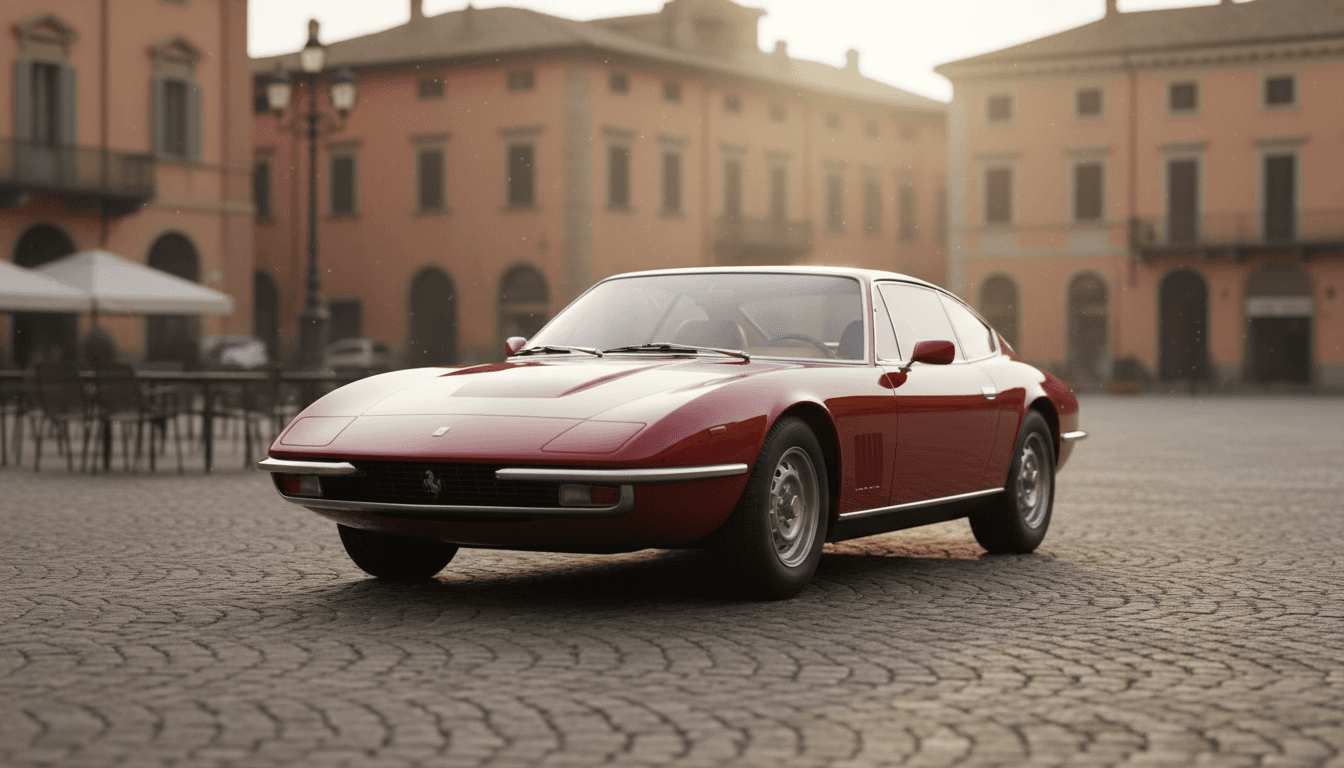
Classic Maserati Prices in 2026
A new Hollywood biopic and the Trident's 100th anniversary are reviving interest in classic Maseratis. Here is what a vintage Maserati actually costs in Italy today, from an entry-level Biturbo to collector-grade icons, and what buyers need to know about certification, historic plates and road tax.
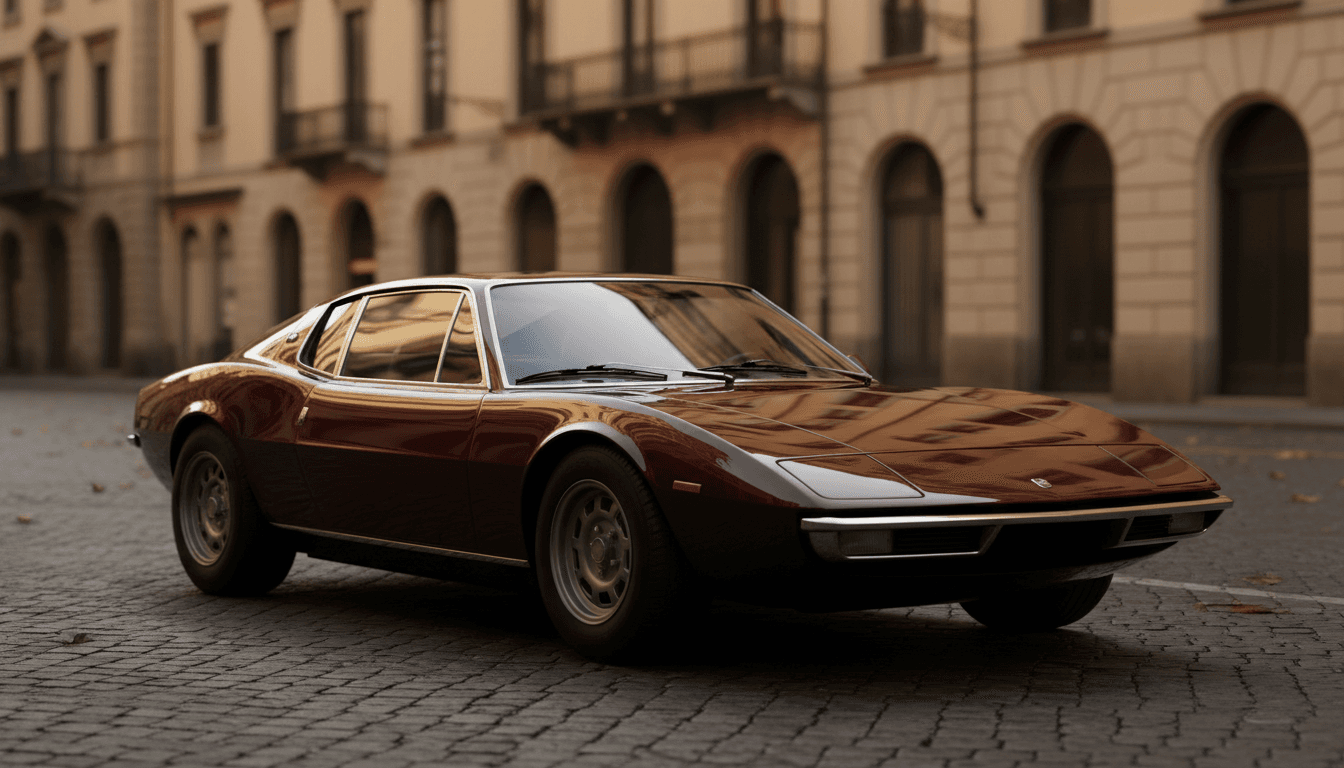
Classic Lancia Gamma: What It's Worth in 2026
Lancia has revived the Gamma name for a new 2026 SUV. But what is the original 1976-84 Gamma actually worth today? History, known flaws, real prices, and a pre-purchase checklist.