All-Wheel Drive Isn't Just for Winter: The 2026 Guide to Buying a Used AWD Car
Suzuki has put the topic back in the spotlight this week: AllGrip all-wheel drive is not just for snow, it works year round. Here is how it actually works, how much more it costs to run, and what to check before buying a used AWD car.
Why the topic is back in the news
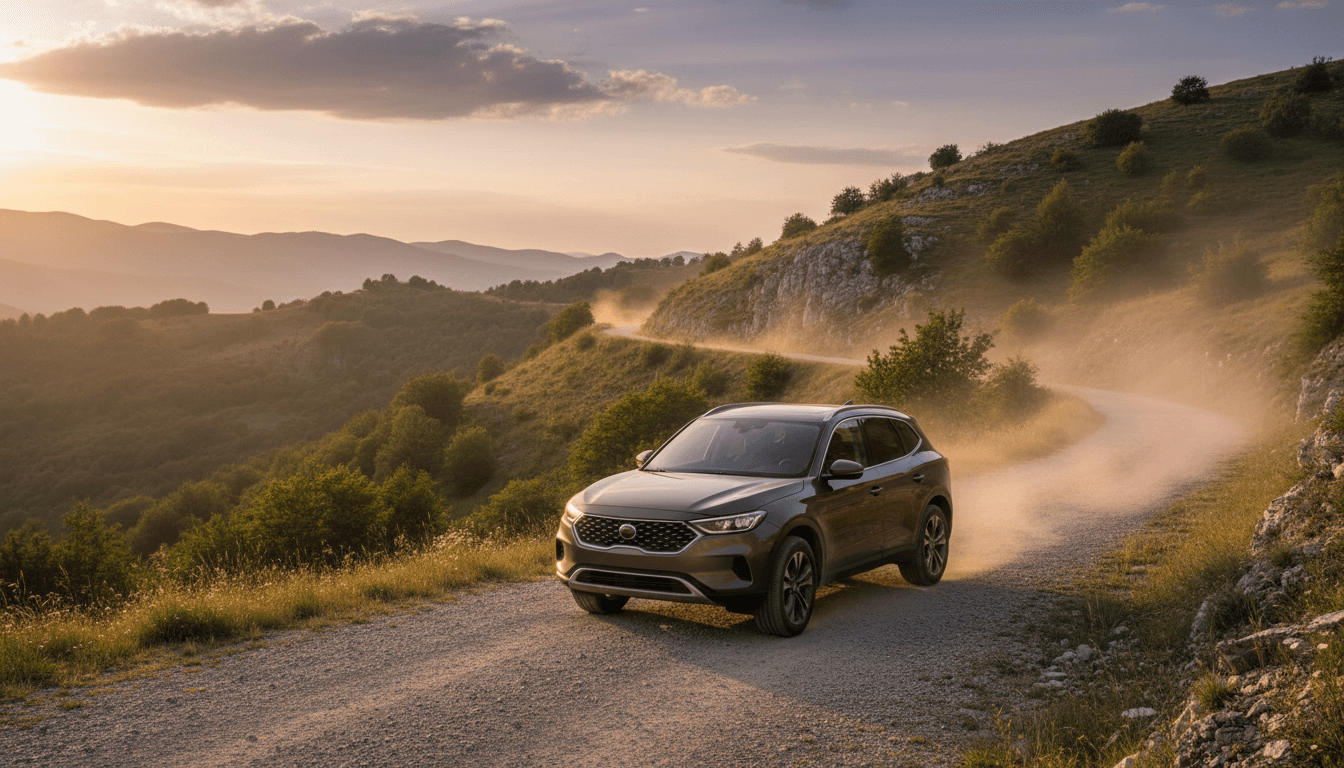
Over the past few days several Italian automotive outlets have returned to writing about Suzuki AllGrip all-wheel drive, making a point that often gets forgotten: AWD is not a winter-only accessory, it is useful year round. A significant share of Italy's secondary road network is unpaved or natural surface, and reaching farmhouses, hidden coves, mountain trails or plain gravel roads during summer holidays requires more grip than a standard front-wheel-drive car offers. It is a topic worth revisiting for used car buyers too, since AWD cars remain a misunderstood niche on the second-hand market: bought in winter for the snow and then resold, or dismissed outright as expensive and pointless in the city.
How all-wheel drive actually works
Not all AWD systems are the same. Suzuki, for instance, offers four different systems under the AllGrip name: AllGrip Auto, which automatically engages the rear wheels when needed; AllGrip Select, which lets the driver pick a mode based on the road surface; E-Four, used on hybrid models with an independent rear electric motor; and AllGrip-e, built for battery-electric versions. Other manufacturers follow similar logic under different names: Quattro for Audi, xDrive for BMW, 4Matic for Mercedes, AWD-i for Toyota. The distinction that matters most for used buyers is between permanent systems, always active on all four wheels, and engageable or electronically controlled systems, which stay in single-axle drive until sensors detect a loss of grip. The former offer the highest safety margin but weigh more and burn more fuel; the latter are a more balanced compromise for drivers who mostly stay on tarmac.
How much more it costs to run
The declared fuel consumption gap between a front-wheel-drive version and the equivalent AWD variant of the same model is often small on paper, sometimes just a few tenths of a litre per 100 km, but in real-world use the difference widens noticeably, especially in city driving where the system works harder. There are essentially two causes: the extra weight of drive shafts, differentials and joints, which on some models adds 60 to 70 kg over the two-wheel-drive version, and the additional mechanical friction that saps engine power. On the maintenance side, an AWD car generally has more wearable components: extra constant-velocity joints, a rear differential to keep an eye on, electronic clutches in auto-engaging systems. These are not common failure points on a car that has been serviced regularly, but they are worth budgeting for when evaluating a high-mileage used example.
Road tax, insurance and other fixed costs
Road tax and insurance are affected only marginally by the drivetrain itself: both depend mainly on engine displacement, fiscal power and no-claims class, not on whether the car drives two or four wheels. However, AWD trims of a given model often come with a slightly more powerful engine or a higher equipment level, which indirectly translates into a somewhat higher road tax and insurance premium compared with the base front-wheel-drive version. It is worth checking the specific technical sheet before falling in love with a listing.
Which brands to consider on the used market
On the Italian used market, Suzuki remains one of the most affordable ways into genuine four-wheel drive: a Vitara AllGrip from the last few years typically trades between 15,000 and 27,000 euros depending on trim and mileage, with the S-Cross Hybrid AllGrip landing in a similar range. These are mechanically simple, robust systems with contained running costs. Toyota and Subaru remain the reference point for long-term reliability and strong resale value: the RAV4 AWD-i in particular has become one of the most sought-after hybrid AWD models in recent years, even among buyers with no serious off-road use in mind. The German premium brands, Audi Quattro, BMW xDrive and Mercedes 4Matic, deliver the strongest performance and comfort but come with higher maintenance and parts costs once the car is out of warranty, worth weighing carefully if the after-sales budget is tight.
What to check before buying a used AWD car
A few checks, beyond the usual used-car inspection, are particularly useful on an all-wheel-drive vehicle. First, confirm the system engages correctly: on wet tarmac or a gravel stretch, a metallic noise or an odd surge can signal a worn joint or differential. Second, review the service history for the rear differential oil change, often overlooked compared with the engine oil change. Third, on electronically controlled systems, check that no traction-control warning lights or fault codes are stored in the control unit, something a trusted mechanic can verify in minutes with an OBD scan. Finally, try to understand how the previous owner actually used the car: one driven mostly on city tarmac will have put far less strain on the drivetrain than one regularly used on gravel or in the mountains, but it is worth hearing the car's history before signing anything.
When it is genuinely worth it
All-wheel drive makes sense for people living in hilly or mountainous areas, for those with a second home reachable only via unpaved roads, for anyone towing a trailer for motorcycles or bikes, or simply for drivers who want the extra safety margin during heavy rain on frequent motorway or highway trips. It makes far less sense for someone covering only a handful of urban kilometres a day, where the added cost in purchase price, fuel and maintenance rarely pays off. That is the real lesson from the Suzuki story: before dismissing or craving a 4x4 purely with snow in mind, it is worth looking at how the car will actually be used across all twelve months of the year, not just the two or three coldest ones.
Further reading
- Suzuki AllGrip: come funziona la trazione integrale 4x4 — NewsAuto
- Perché la trazione integrale non è solo per l'inverno: la verità sui SUV Suzuki in estate — AutoPromoNews
- Nuove auto 4x4 2026: tutte le novità a trazione integrale — AutoScout24
- Migliori auto 4x4 del 2026: 7 modelli e guida all'usato — AutoSupermarket
- Tutte le auto a trazione integrale sotto i 40.000 euro — Motor1 Italia
- Quali sono i contro della trazione integrale? — TargetMotori
Related articles
Dacia Spring vs Leapmotor T03: Which to Buy in 2026?
Price, range, charging and equipment for Italy's two most searched low-cost EVs, compared point by point, with a look at what to expect once they reach the used market.
Used Chinese Cars: Worth Buying in 2026?
Chinese brands are booming in new-car sales (+72% registrations in 2025) but stuck at just 3% of the used market. Here is what the data on resale value, warranty and reliability of MG, BYD, Omoda and Jaecoo really says before buying one secondhand.