The Audi 90: Nearly Forty Years On, the Sensible Sedan That Is Still a Smart Buy
A recent test drive has put the Audi 90 back in the spotlight, the five-cylinder sedan that once played elegant older sibling to the 80. Here is why sturdy engines, still-modest prices and an already-active road tax exemption make it one of the most sensible German youngtimers to buy in Italy right now.
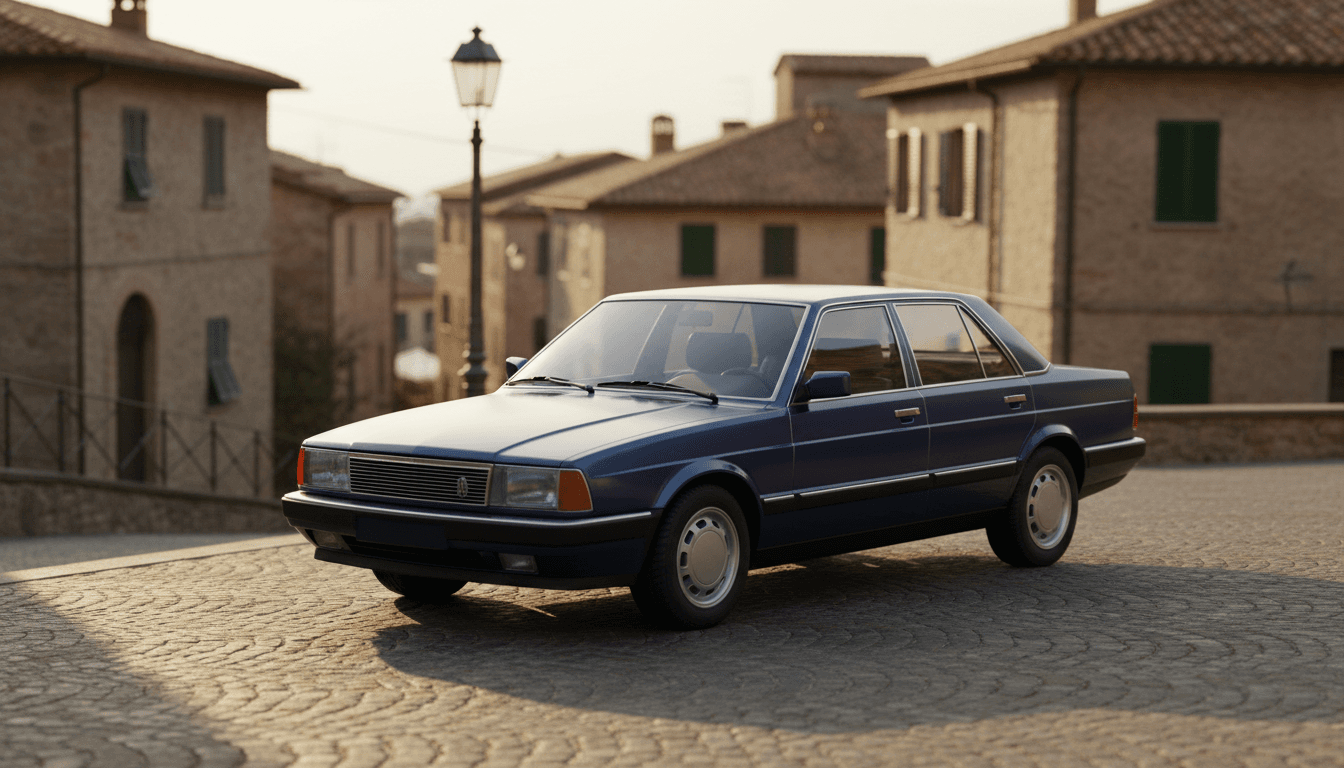
A test drive that puts the 90 back in the spotlight
In late August, a fresh test drive published by Motor1 Italia rekindled interest in a car most people barely remember: the Audi 90, driven nearly forty years after it launched, with a verdict that surprises anyone expecting a dusty Eighties relic [1]. The piece's core argument is that the 90 has not aged like a museum piece, but like an honest mechanical tool: direct steering, a five-cylinder engine with an unmistakable note, a dashboard built to last. That is reason enough to look at this model not just as a curiosity for enthusiasts, but as a genuine purchase for anyone in Italy searching for a German classic to actually drive, not merely park in a garage.
The 80's more refined sibling
Launched in 1984 and updated with a second series in May 1987, the Audi 90 was conceived as a more polished, better-equipped version of the 80 sedan, with a redesigned nose, a distinctive reflector strip linking the rear light clusters, and a nicer-finished cabin [2][3]. It was never a sports car in the strict sense, but a mid-size sedan built for buyers who wanted Ingolstadt's build quality without the price tag of a flagship. What still gives it character today is the five-cylinder engine, a rare layout Audi turned into a sonic signature as much as a technical one, a direct descendant of the work behind the legendary quattro coupe that introduced permanent all-wheel drive to a European production car back in 1980 [4].
The engines worth knowing before you buy
The range is wider than most people assume, and engine choice changes both the driving experience and the running costs considerably. At launch, buyers could choose between fuel-injected five-cylinder petrol engines of 1,994cc (115hp) and 2,226cc (136hp), alongside a 1.6-litre four-cylinder turbodiesel producing 70hp for buyers watching fuel consumption [3]. The second series added punchier variants, up to the 20-valve 2.3 E rated at 170hp, plus a cheaper 1.8-litre four-cylinder producing 111-112hp introduced in the final two years of production [3][5]. The quattro versions, with permanent all-wheel drive, are the most sought-after by collectors but also the most complex to maintain; for honest daily use, the front-wheel-drive 2.0 E or 2.2 E five-cylinders remain the best compromise between character, parts availability and mechanical simplicity.
What it actually costs in Italy today
On the Italian used market, prices remain surprisingly accessible for a well-built historic German sedan. High-mileage cars in fair condition start around 6,000 euros, while well-kept examples average 10,000-12,000 euros; a well-preserved 1991 car with quattro all-wheel drive and the 2.0 petrol engine was recently listed at 15,000 euros [5]. Those figures sit well below what the original quattro coupe now commands, which has settled into an entirely different market bracket, making the 90 one of the more sensible ways to enter the classic Audi world without emptying your savings.
What to check before buying
Like any German car from the Eighties reaching the end of its first-owner life cycle, the weak points are well known and manageable if you know where to look. Rust is enemy number one: wheel arches, sills and the boot floor deserve a close inspection, ideally with the car up on a lift. Check the service history for the timing belt, because on a five-cylinder of this era a snapped belt can mean an expensive cylinder head repair; if there is no clear record of when it was last replaced, budget for it in the negotiated price. On quattro versions, inspect the driveline joints and suspension bushings, components that wear quietly and often go unnoticed until service time. Finally, the fuel injection electronics of this era are far simpler than modern systems, but aged connectors can trigger false warning signs: a mechanic who actually knows the model is worth more than any do-it-yourself diagnosis.
Road tax, insurance and paperwork
An often underrated practical advantage: cars registered more than thirty years ago are automatically exempt from Italy's annual road tax across most of the country, with no requirement to register with a historic vehicle club, provided the car is not used commercially [6]. The first-series Audi 90, registered from 1984, already comfortably clears that threshold. The exception is Lombardy, where the automatic exemption is not recognized and owners need to register with a body such as ASI to access the benefit [6]: anyone living in or registering the car in that region should factor in that paperwork, though it also opens the door to dedicated classic-car insurance policies, often cheaper than standard cover for limited annual mileage.
Why now is the moment to look
The market for Eighties and Nineties German youngtimers has been moving for a while, with coupes and sportier variants already climbing sharply in value. Clean sedans like the 90, less chased by hardcore collectors, remain the segment where well-kept cars still trade at recent-used-car prices, with the added bonus of zero road tax and mechanicals any competent independent garage can service. It is not a speculative investment, and that is exactly why it remains one of the most rational buys for anyone in Italy looking for a reliable classic to actually use, not just admire.
The takeaway
The Audi 90 will never make headlines the way the rally-bred quattro coupes do, but its mechanical honesty and still-grounded prices make it one of the most balanced choices for a German classic you can live with every day. Before you sign anything, check the service and timing-belt history, inspect the bodywork for rust, and confirm the registration region so you know exactly how the road-tax exemption applies to your case.
Sources
- Audi 90, 40 anni dopo e' ancora una berlina sorprendente - Motor1 Italia
- Audi 90 - Wikipedia - Wikipedia
- Audi 90: dimensioni, interni, motori, prezzi e concorrenti - AutoScout24
- Audi: 40 anni fa il debutto della trazione integrale quattro - Automoto.it
- Audi 90: prezzo, dimensioni, modelli e interni - Subito.it
- Bollo auto storiche: riduzioni ed esenzioni per il 2026 - CercAssicurazioni.it
Further reading
- Audi 90, 40 anni dopo e' ancora una berlina sorprendente — Motor1 Italia
- Audi 90 — Wikipedia
- Audi 90: dimensioni, interni, motori, prezzi e concorrenti — AutoScout24
- Audi: 40 anni fa il debutto della trazione integrale quattro — Automoto.it
- Audi 90: prezzo, dimensioni, modelli e interni — Subito.it
- Bollo auto storiche: riduzioni ed esenzioni per il 2026 — CercAssicurazioni.it
Related articles
Classic Maserati Prices in 2026
A new Hollywood biopic and the Trident's 100th anniversary are reviving interest in classic Maseratis. Here is what a vintage Maserati actually costs in Italy today, from an entry-level Biturbo to collector-grade icons, and what buyers need to know about certification, historic plates and road tax.
Classic Lancia Gamma: What It's Worth in 2026
Lancia has revived the Gamma name for a new 2026 SUV. But what is the original 1976-84 Gamma actually worth today? History, known flaws, real prices, and a pre-purchase checklist.