The 90s Youngtimers Are Overtaking Traditional Classics: What Is Really Changing
Prices for 1950s and 1960s cars are cooling off while 90s sports cars and Japanese icons climb by up to 10% a year. Behind the flip is a generational change in who is buying: here is what it means if you want in now.
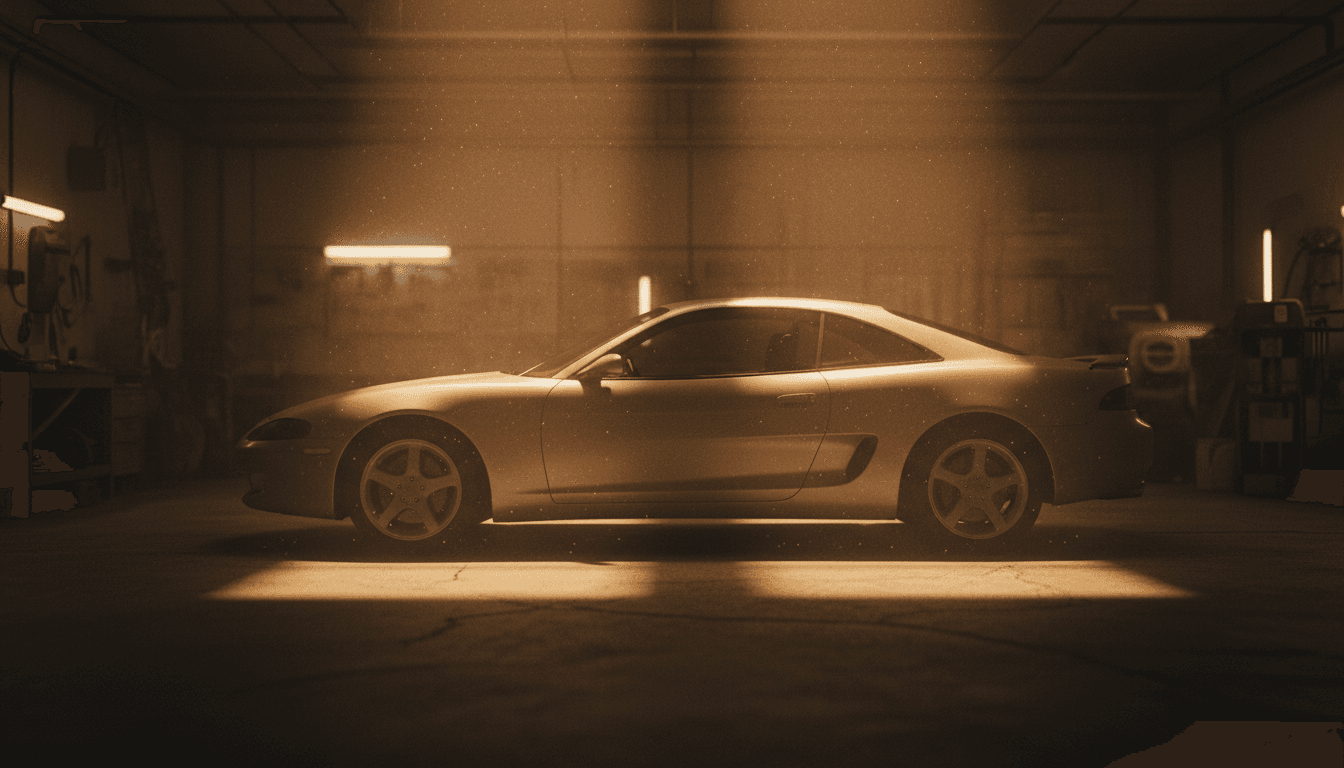
The classic car market is flipping
For decades the hierarchy of Italian car collecting was simple: the older the car, the more it was worth. That rule is breaking down. Market data gathered through 2026 shows movement in two opposite directions. Cars over sixty years old, particularly 1950s and 1960s models that are not outright icons, are seeing their valuations cool [1]. Meanwhile the youngtimer segment, broadly cars built between the mid-1980s and the end of the 1990s, is posting annual gains that reach as high as 10% on certain models [2].
This is not a passing bubble or a niche quirk. It is the result of a change in who is doing the buying, and it is worth understanding properly before putting money into a classic.
Why it is happening: today's buyer is fifty, not eighty
The most convincing explanation is also the most obvious: people collect the car they wanted at twenty. The generations born in the 1970s and 1980s, who now hold the greatest purchasing power, are chasing the sports cars and classics built in the 1980s and 1990s [2]. Anyone who dreamed of an Alfa Giulia in the 1960s is often past eighty now and selling rather than buying. The result is a transfer of demand that shows up directly in asking prices.
There is also a practical factor that often gets underplayed: 1990s cars are still genuinely usable. They have reliable electronic injection, modern brakes, acceptable passive safety and parts you can still source. A 1950s saloon demands expertise, proper storage and patience; a 1990s coupe you can drive to the coast in August without a second thought. For a buyer under fifty who wants to drive rather than just display, that difference matters enormously.
The models pulling hardest
Among the most sought-after youngtimers, a few names come up in every sector analysis. The BMW M3 E46 and the first-generation Audi TT are repeatedly cited for their balance of style, performance and appreciation potential [3]. On the Japanese side, the Mazda MX-5 and Nissan Skyline are bringing in an entirely new audience, drawn by mechanicals that are still comprehensible and running costs that stay reasonable [3]. The first-series TT is a good illustration of how wide the internal spread can be: roughly five thousand euros gets you a 1.8 turbo in ordinary condition, while an impeccable 3.2 V6 can reach around thirty-five thousand [1].
Do not read those numbers as a promise, though. On the same badge, the gap between a fully documented example and a random one is enormous. In this segment you are buying the car's history, not the model name.
What is not falling
One important exception deserves flagging, because it undercuts the simplistic reading that all older classics are sliding. The so-called people's cars, meaning the Mini, the Fiat 500 and the Beetle, remain immune to the downturn and hold steady demand [1]. These are models with a vast enthusiast base, effectively infinite parts availability and an emotional pull that cuts across generations. Anyone looking for a safe entry into the classic world, rather than a bet, still finds it there.
By the same token, the absolute icons, cars with a competition record or tiny production numbers, play in a separate league entirely and do not follow these mass-market dynamics.
The tax question: certification and concessions
Before buying, one point makes a real difference to annual running costs in Italy. Concessions for vehicles of historical interest are not granted automatically on age alone: they require recognition through ASI certification, from the Automotoclub Storico Italiano, or inclusion of the model on the ACI protection lists [4]. Many 1990s youngtimers are right at the thirty-year threshold now, which makes them potentially eligible but not automatically favoured.
This needs checking model by model, and before purchase rather than after. Between road tax and insurance, the difference between a car recognised as historic and one that remains an ordinary used vehicle can be substantial.
How to move if you want in now
A few concrete pointers, whichever model you settle on:
- Prioritise documentation. Service records, restoration invoices, ownership history: on a youngtimer these count for more than the odometer reading.
- Be sceptical of unproven ultra-low mileage. On thirty-year-old cars, odometer tampering has historically been widespread, and 1990s electronics are easier to manipulate than a modern car's.
- Check parts availability for that specific model before buying, not after. Certain interior plastics, light units and electronic components from the 1990s are now effectively unobtainable and cost more than the mechanicals.
- Inspect structural rust points carefully. Many 1990s cars had mediocre corrosion protection compared with both restored classics and modern vehicles.
- Accept that liquidity is not instant. Reselling a niche youngtimer takes time and the right buyer.
The bottom line
The classic market is neither collapsing nor exploding: it is shifting. Cars from the 1950s and 1960s without genuine icon status are losing ground because the generation that wanted them is leaving the stage, while 1990s sports cars and Japanese models climb on the back of younger buyers who actually intend to drive them. If you are weighing an entry today, the sensible move is not to chase double-digit appreciation but to pick a car you genuinely want to use, buy one with a documented history behind it, and check its tax status first. The rest, in a market that moves in generational waves, is largely outside your control.
Further reading
- Businessonline.it, How is the classic car market doing in Italy? Data, statistics and outlook, 2026
- L'Automobile ACI, From flop to cult: the youngtimers enthusiasts have re-evaluated, 2026
- Il Messaggero Motori, Classics and youngtimers, 10 models to bet on, 2026
- AutoScout24.it, Classic cars 2026: the best models and their prices, 2026
- MilanoFinanza, The 7 best youngtimers collectors are already buying, June 2026
Further reading
- Come va il mercato delle auto d'epoca in Italia? Dati e statistiche, le auto migliori e peggiori e prospettive — Businessonline.it
- Da flop a cult: le youngtimer rivalutate dagli appassionati — L'Automobile (ACI)
- Auto storiche e youngtimer, 10 modelli su cui puntare. Prezzi interessanti e quotazioni che promettono rialzi — Il Messaggero Motori
- Auto d'epoca 2026: i modelli migliori e i prezzi — AutoScout24.it
- Le 7 migliori youngtimer che i collezionisti stanno gia comprando — MilanoFinanza
Related articles
Classic Maserati Prices in 2026
A new Hollywood biopic and the Trident's 100th anniversary are reviving interest in classic Maseratis. Here is what a vintage Maserati actually costs in Italy today, from an entry-level Biturbo to collector-grade icons, and what buyers need to know about certification, historic plates and road tax.
Classic Lancia Gamma: What It's Worth in 2026
Lancia has revived the Gamma name for a new 2026 SUV. But what is the original 1976-84 Gamma actually worth today? History, known flaws, real prices, and a pre-purchase checklist.